
Uruguay’s capital is no longer just a well-kept secret. As digital nomads, retirees, and families seek destinations that balance modern infrastructure with authentic character, Montevideo has emerged as a premier choice. Stretching along the shimmering banks of the Río de la Plata, this city offers a unique blend of European-influenced architecture, a thriving arts scene, and a pace of life that prioritizes well-being over the frantic rush of typical metropolises.
For those considering a move or an extended stay, understanding the rhythm and practicalities of this coastal gem is essential. Here is why the city is captivating the hearts of travelers and new residents alike.
A Lifestyle of Balance and Stability
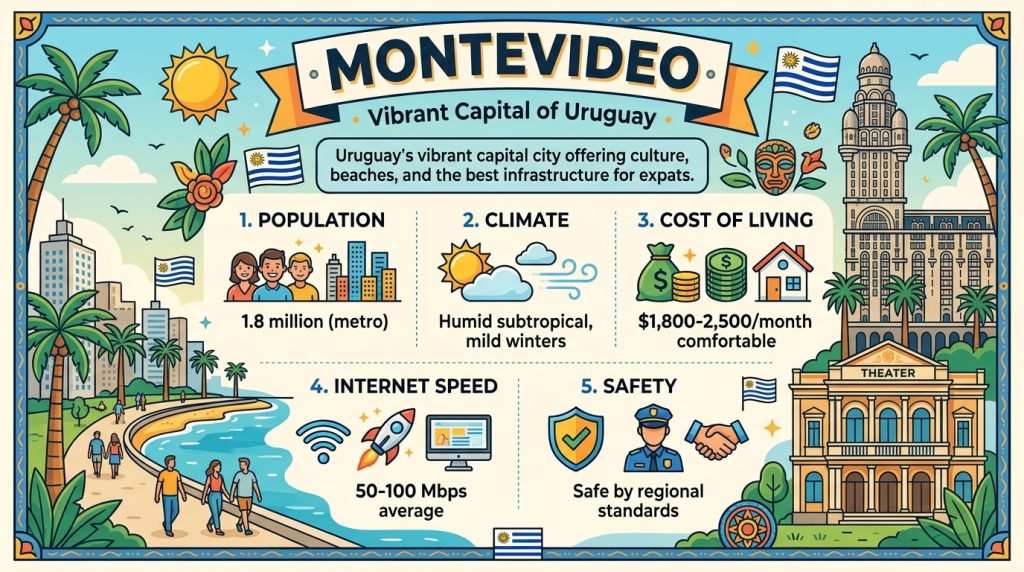
The primary draw for many moving to this region is the profound sense of political and economic stability that Uruguay maintains. Unlike some of its larger neighbors, it offers a predictable and safe environment, consistently ranking as one of the safest capital cities in Latin America.
For the modern professional, the city has undergone a significant digital transformation. High-speed fiber optic internet is now standard in most residential neighborhoods, and the city’s private healthcare system is frequently cited as being on par with Western European standards. Whether you are settling in the upscale coastal neighborhoods of Pocitos and Carrasco or enjoying the historic charm of Ciudad Vieja, you will find that the infrastructure supports a comfortable, high-quality lifestyle.
Culture, Community, and the “Rambla”
Life here is lived outside. The centerpiece of the social experience is the Rambla, a 18.5-mile continuous coastal walkway. It serves as the city’s living room, where residents gather at sunset to sip yerba mate—a traditional, caffeine-rich herbal infusion—walk their dogs, or simply watch the tide. This communal habit of stopping to enjoy the sunset reflects the local ethos: work hard, but never at the expense of your social connections or your peace of mind.
Cultural depth is woven into every corner. The city’s history is preserved in its museums, such as the Andes Museum 1972, and celebrated in its vibrant street life. From the drum beats of candombe echoing through the streets to the sophisticated performances at the Solís Theatre, there is an ever-present artistic energy. And when it comes to gastronomy, the city does not disappoint. The Mercado del Puerto remains an iconic destination for food lovers, offering the best of Uruguay’s world-famous grass-fed beef, grilled over open flames in the traditional asado style.
Navigating the Neighborhoods
Choosing where to live depends on your personal vibe. The coastal strip is the most popular area for expats, offering a mix of modern, high-rise apartments and easy beach access.
- Pocitos: Famous for its bustling beach and proximity to high-end shopping and dining.
- Punta Carretas: Known for its mix of classic charm, trendy boutiques, and the nearby Rodó Park, which offers a serene escape with its lake and rose garden.
- Carrasco: A more tranquil, residential area featuring elegant homes and excellent international schools, making it a favorite for expat families.
- Ciudad Vieja: The historic Old Town, where the city’s colonial roots are most visible, is currently experiencing a revival. It is ideal for those who prefer character-filled, restored apartments and proximity to museums and art galleries.
Practical Considerations for Newcomers
Moving to a new country requires preparation. Uruguay’s residency pathways, including the digital nomad permit, have become increasingly accessible, making the transition smoother for remote workers.
While the cost of living in the capital can be higher than in other parts of South America, the trade-off is the quality of life. A balanced monthly budget typically covers private healthcare, dining out, and a comfortable apartment in a safe, walkable neighborhood. The people are known for being warm and direct, and while Spanish is the primary language, you will find that the local community is exceptionally welcoming to newcomers who show an interest in their rich traditions.
Ultimately, this city provides a rare combination: all the conveniences of a functioning modern capital, coupled with the relaxed, unpretentious charm of a coastal town. Whether you come for the stability, the culture, or the promise of a more balanced existence, you will likely find that this city is not just a place to reside, but a place to truly belong.
