
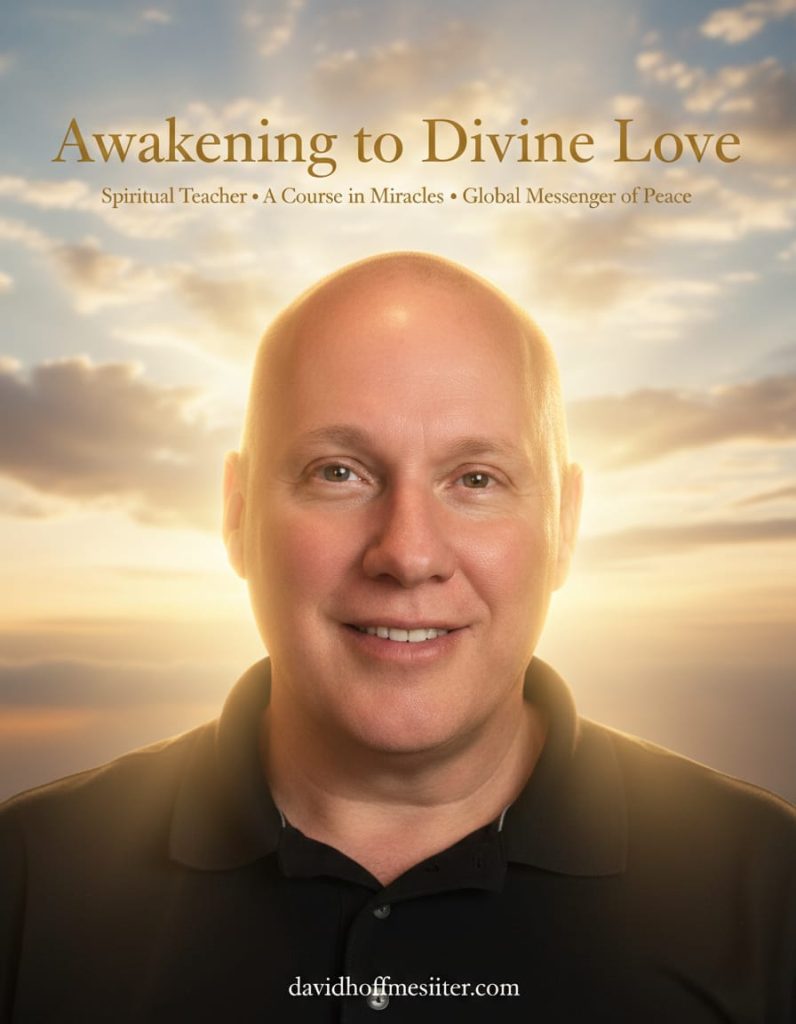
Many seekers begin their exploration by searching for david hoffmeister wikipedia to understand the basic facts of his life. These summaries provide dates, affiliations, and milestones. Yet factual overviews only touch the surface. A more meaningful understanding emerges when reading deeply about david hoffmeister and examining how his life reflects consistent spiritual application rather than theoretical study.
David Hoffmeister is widely recognized as a devoted teacher of A Course in Miracles (ACIM), but what distinguishes him is not simply teaching—it is embodiment. His journey illustrates what occurs when spiritual principles are applied without compromise.
The Turning Point: From Intellectual Curiosity to Total Commitment
Before encountering ACIM, David lived what many would consider a stable and conventional life. He was educated, engaged in professional pursuits, and followed socially accepted pathways. Yet beneath outward stability, a deeper existential question was present: What is the true purpose of life?
This question eventually led him to A Course in Miracles in 1986. Unlike casual readers who explore spiritual texts intellectually, David approached ACIM with disciplined seriousness. He treated it as a living manual for awakening rather than philosophical material.
This marked the beginning of an irreversible shift.
A Course in Miracles as a Practical Framework
ACIM teaches that suffering originates from misperception rooted in the ego—the belief in separation from God and others. Forgiveness is presented as the mechanism that corrects perception rather than pardons wrongdoing.
David adopted these teachings as daily practice. Instead of debating theology, he applied forgiveness whenever emotional disturbance arose. He questioned every judgment, grievance, and fear.
Gradually, inner peace replaced anxiety. Personal ambition lost its appeal. What remained was a growing desire to follow divine guidance fully.
The Radical Experiment of Trust
One of the most striking aspects of David Hoffmeister’s life is his willingness to release conventional security structures. Over time, he relinquished long-term career planning, personal property attachments, and financial predictability.
This was not recklessness—it was an experiment in radical trust.
He describes listening inwardly for direction before making decisions. Travel invitations, teaching opportunities, and community formation occurred organically. There was no aggressive marketing strategy or institutional expansion agenda.
Instead, the emphasis remained on inner alignment.
Living Without Personal Agenda
A key theme in David’s teachings is the relinquishment of personal agenda. The ego thrives on preference, comparison, and outcome control. Spiritual surrender, in contrast, involves allowing guidance to replace personal planning.
In practical terms, this means:
- Acting from inspiration rather than fear
- Making decisions through prayerful reflection
- Releasing attachment to specific results
- Viewing challenges as opportunities for forgiveness
His lifestyle demonstrates that surrender is not passivity; it is clarity without internal conflict.
Teaching Style and Communication
David Hoffmeister communicates in a calm, steady tone. His talks emphasize direct experience over philosophical abstraction. Instead of presenting complex metaphysical arguments, he consistently brings attention back to practical forgiveness.
He frequently highlights that awakening is not about becoming special or spiritually superior. It is about undoing the false identity constructed by ego.
This consistency has attracted seekers from diverse backgrounds—religious, secular, and interfaith.
Community and Shared Devotion
David is closely connected with the Living Miracles community, which serves as an environment for applying ACIM principles collectively.
Within this setting, members practice:
- Radical honesty
- Emotional transparency
- Collaborative decision-making
- Shared prayer and reflection
Community life functions as a mirror. Interpersonal triggers reveal hidden judgments, providing opportunities for deeper forgiveness.
David emphasizes that the purpose of community is not social belonging but spiritual awakening.
Addressing Common Misconceptions
Is Surrender Escapism?
Some observers assume that surrendering to divine guidance leads to avoidance of responsibility. However, David’s approach requires heightened awareness and accountability. Every emotional reaction is examined rather than projected outward.
Is Forgiveness Passive?
Forgiveness, as taught in ACIM, does not ignore behavior. It addresses perception. It involves recognizing that emotional disturbance originates in one’s own interpretation rather than external events.
This reframing demands discipline and humility.
The Psychological Dimension
From a psychological perspective, David Hoffmeister’s teachings align with cognitive reframing and mindfulness practices. Observing thoughts without attachment parallels contemporary therapeutic approaches.
However, his framework extends beyond mental health into metaphysical inquiry. He challenges the foundational belief in individual separation.
This dimension distinguishes his message from purely therapeutic spirituality.
Global Reach and Influence
Over decades, David has traveled internationally, offering retreats, gatherings, and online teachings. Technology has amplified accessibility, allowing global participation.
Despite expanded reach, his message remains unchanged:
Peace is found by relinquishing ego and trusting divine guidance.
This consistency reinforces authenticity.
Practical Guidance for Seekers
Those inspired by his journey may consider structured application:
- Begin daily quiet reflection
- Study ACIM lessons systematically
- Notice emotional disturbances as opportunities
- Practice immediate forgiveness
- Ask inwardly for direction before significant decisions
Transformation emerges through repetition and sincerity rather than sudden revelation.
Why His Example Resonates Today
Modern culture often prioritizes achievement, self-branding, and external validation. David Hoffmeister’s path offers a contrasting paradigm—simplicity, devotion, and surrender.
His life challenges the assumption that control equals security. Instead, he demonstrates that peace arises when control is relinquished.
This message appeals to those fatigued by constant striving.
Beyond Biography
While biographical details offer context, they cannot capture the essence of lived devotion. Understanding David Hoffmeister requires observing how consistently he applies the principles he teaches.
His journey illustrates that spiritual awakening is not theoretical—it is practical, daily, and disciplined.
For sincere seekers, his example serves not as something to admire from a distance but as an invitation to experiment with forgiveness and trust.
FAQ
Who is David Hoffmeister?
David Hoffmeister is a spiritual teacher known for his dedication to A Course in Miracles and his emphasis on forgiveness and divine guidance.
What makes his teachings unique?
He consistently emphasizes practical application over intellectual discussion, focusing on lived experience.
When did his spiritual path begin?
His transformative journey began in 1986 after encountering A Course in Miracles.
Does he belong to a religious institution?
His teachings are spiritual rather than institutional and center on ACIM principles.
How can someone start learning from his message?
Begin with daily reflection, structured ACIM study, and practicing forgiveness in everyday situations.
